
Driveway Guide
Repair or Replace Your Concrete Driveway?
The decision depends less on one crack and more on what the damage says about the slab and the ground beneath it.
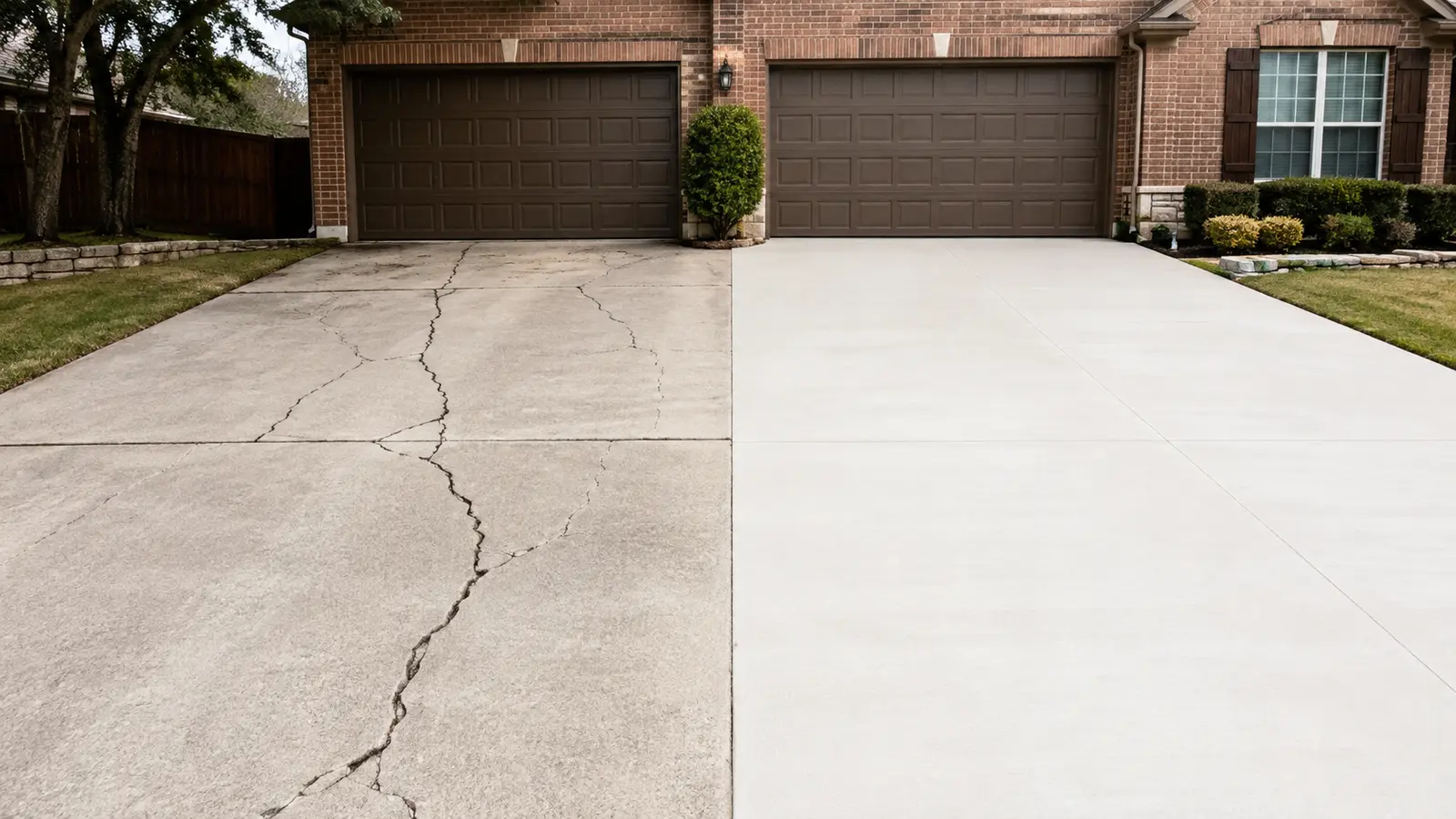
Concrete can develop cracks and surface wear without automatically needing complete replacement. A narrow isolated crack may be a maintenance issue. Widespread movement, recurring repairs, poor drainage, or multiple displaced sections can point to a larger problem.
The right starting point is an on-site evaluation. A contractor should look at the entire driveway, how vehicles travel across it, where water moves, and whether damaged sections create safety or property concerns.
Not sure what the driveway needs?
OCC can evaluate the visible condition and discuss repair or replacement options.
Call or Text 972-302-5917Signs a localized repair may be reasonable
A limited repair may make sense when damage is confined to a small area, the surrounding slab remains stable, drainage is working, and the repair will not simply cover ongoing movement. Examples may include an isolated damaged corner, a small section affected by a specific event, or a joint that needs attention.
Appearance matters too. Even a structurally reasonable patch may remain visible because new and old concrete rarely match perfectly. Decide whether your priority is function, appearance, or both.
Signs replacement deserves consideration
Multiple displaced sections
When several panels have moved to different heights, the issue may extend beyond a single crack. Uneven edges can affect vehicle movement, water flow, and walking safety.
Widespread cracking
Numerous cracks in different directions can indicate that the slab is no longer behaving as one stable system. Filling each crack may improve appearance temporarily without addressing the underlying movement.
Recurring drainage problems
If water repeatedly flows toward the garage, home, or low areas, replacement may provide an opportunity to correct grade rather than continue treating surface symptoms.
Repeated failed repairs
A history of patches that reopen or settle can be a clue that the repair method is not solving the root condition. Keep records and photographs so the contractor can see what has already been attempted.
Severe surface deterioration
Large areas of scaling, crumbling, exposed aggregate, or broken edges can make isolated repairs difficult to blend or justify. The depth and cause of deterioration matter, so the full surface should be evaluated.
What caused the damage?
Before deciding, ask why the driveway changed. Possible contributors include soil movement, erosion, poor drainage, inadequate support, tree roots, heavy vehicle use, impact damage, or water entering below the slab. Replacement without correcting a known site problem can allow that problem to affect the new work.
Questions for the site visit
- Is the damage cosmetic, functional, or related to movement?
- Is water traveling beneath or toward the damaged area?
- Can one section be replaced without creating a poor transition?
- What preparation would be needed below a replacement section?
- Will the repair remain visibly different from the existing driveway?
- Is the rest of the driveway stable enough to justify a partial solution?
Think beyond today's crack
The best decision balances current damage, remaining driveway condition, appearance, safety, and the chance of paying twice for the same area. A small repair is valuable when it addresses a truly limited problem. Replacement becomes more sensible when the damage is broad or the original layout and drainage need correction.
Frequently Asked Questions
Does every concrete crack require replacement?
No. Concrete can crack for several reasons, and the pattern, width, movement, location, and surrounding condition all matter. Have significant or changing damage evaluated.
Will a concrete patch match the old driveway?
Usually not perfectly. Age, weather exposure, materials, and finishing can create a visible difference between new and existing concrete.
Can one driveway section be replaced?
Sometimes. The surrounding slab, joints, grade, access, and underlying cause should be evaluated before deciding on partial replacement.
Get a straightforward assessment.
Show OCC the damaged area and the full driveway—not just the closest crack.
Request a Free Estimate