
Hiring Guide
How to Choose a Concrete Contractor in North Texas
The best comparison is not the shortest estimate or lowest number. It is the clearest plan for your property.
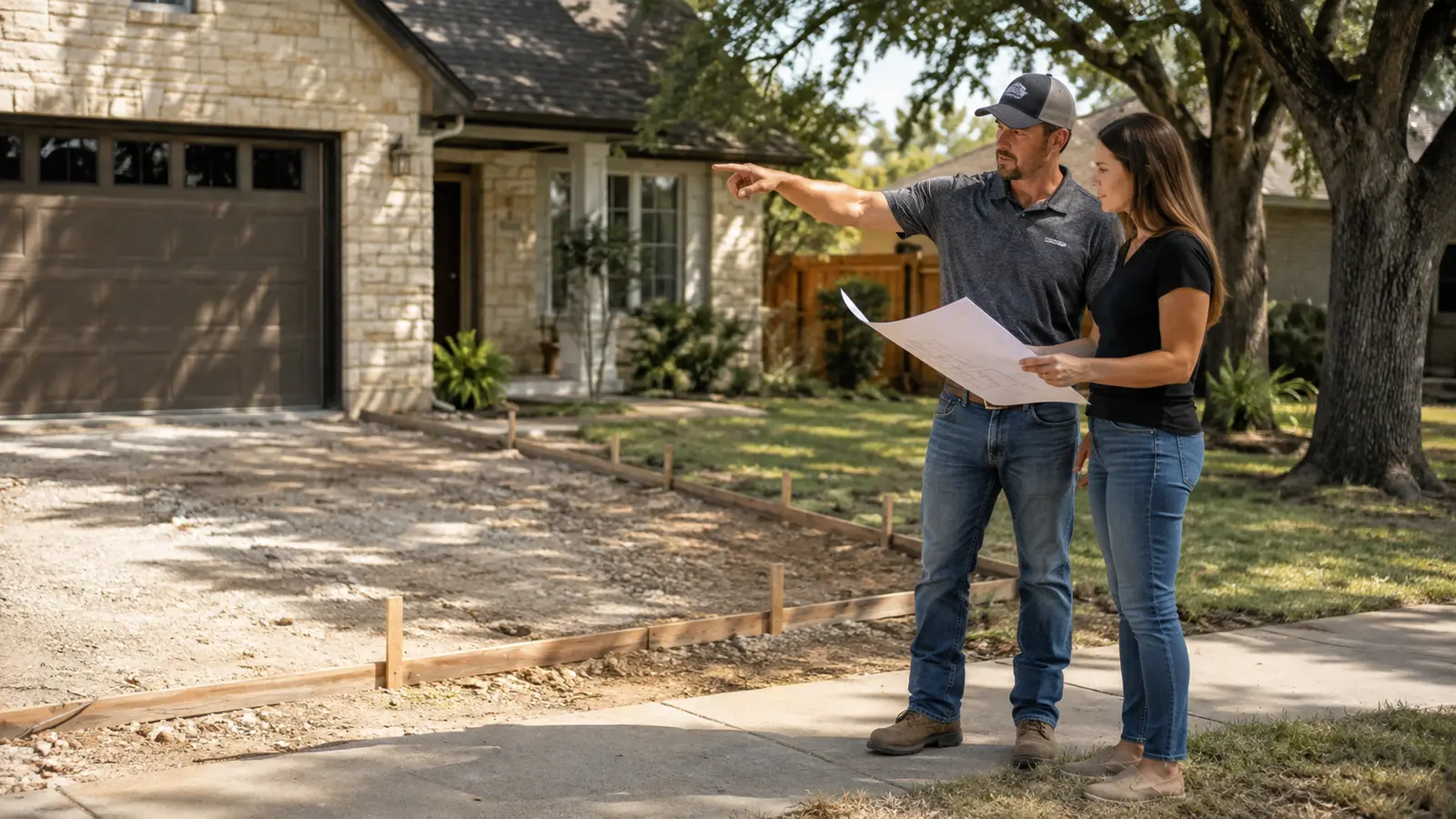
A concrete project becomes part of your home. Once placed, changing dimensions, slope, drainage, or finish is difficult and expensive. The conversation before the work begins matters almost as much as the work itself.
A dependable contractor should be willing to understand the property, explain the proposed scope, identify assumptions, and tell you what information is still needed. You do not need to become a concrete expert—you need enough clarity to know what each estimate actually promises.
Looking for a straightforward estimate?
OCC will discuss the project, evaluate the site, and explain the proposed work in plain language.
Call or Text 972-302-5917Start with the same project description
Give each contractor the same basic information: intended use, approximate dimensions, removal needs, access, drainage concerns, desired finish, and future plans. If one contractor prices a basic slab while another includes demolition, base preparation, connected steps, and cleanup, the totals are not directly comparable.
Look for site-specific questions
A good estimate begins with curiosity. The contractor may ask about heavy vehicles, standing water, buried utilities, gates, downspouts, roots, previous repairs, property rules, and future structures. Those questions show that the plan is being developed for the property rather than copied from a generic project.
Ask what preparation is included
The surface below the concrete deserves a clear explanation. Ask how the crew will handle demolition, unsuitable material, grading, compaction, base preparation, forms, reinforcement, joints, and final elevations. The answer should be understandable even if every technical detail is not included in the estimate.
Review photographs and references carefully
Look for projects similar to yours—not only the contractor's most decorative work. Ask when the photographs were taken and whether the company performed the work shown. When references are available, ask customers about communication, schedule changes, property protection, cleanup, and how concerns were handled.
Verify current business requirements
Ask for the business name that will appear on the agreement and payment record. Confirm any insurance, permit, registration, or local requirements that apply to the project and location. Requirements can vary, so use the appropriate local authority rather than relying on a general online checklist.
Understand payment terms
The agreement should state the deposit, progress payments, final payment, accepted payment methods, and how additional work is approved. Do not rely on a verbal understanding for changes that affect price or scope. Written change approval protects both homeowner and contractor.
Ask about schedule and weather
Concrete work depends on site readiness, material availability, crew scheduling, and weather. Ask how the contractor communicates delays and what needs to happen before the date is confirmed. Be cautious of an exact promise that ignores conditions outside the crew's control.
Pay attention to communication
Notice whether questions are answered directly, whether the contractor returns messages, and whether important details are written down. A project can still encounter surprises, but clear communication makes those surprises easier to handle.
Questions worth asking
- What exact areas and dimensions are included?
- What demolition, haul-off, and preparation are included?
- How will drainage and connections to existing surfaces be handled?
- What finish, joints, reinforcement, and edge details are proposed?
- How will landscaping, structures, utilities, and access areas be protected?
- Who handles required permits or approvals?
- How are changes documented and priced?
- What is the payment schedule?
- What care and opening instructions will I receive?
- Who should I contact if I have a concern?
Red flags to slow down for
- An estimate with no description of the work
- Pressure to decide before you understand the scope
- Large changes discussed only verbally
- Unwillingness to identify what is excluded
- Photos or claims that cannot be explained
- No clear business name, contact information, or payment record
- Promises that dismiss drainage, preparation, weather, or curing
Choosing a contractor is ultimately a trust decision supported by evidence. Clear scope, honest communication, relevant work, and reasonable project controls matter more than a polished sales pitch.
Frequently Asked Questions
How many concrete estimates should I get?
Get enough information to compare scope and feel confident in the contractor. The important part is giving each contractor the same project description and comparing what is actually included.
Should a concrete estimate be in writing?
Yes. A written estimate or agreement should identify the project area, work included, payment terms, and important exclusions or assumptions.
Is the lowest concrete estimate always the best value?
No. A lower estimate may exclude demolition, preparation, reinforcement, drainage work, finish details, or cleanup that another contractor included. Compare the full written scope.
Family-owned. Built to last.
Talk with Olivarez Concrete Company about your North Texas concrete project.
Get a Free Estimate